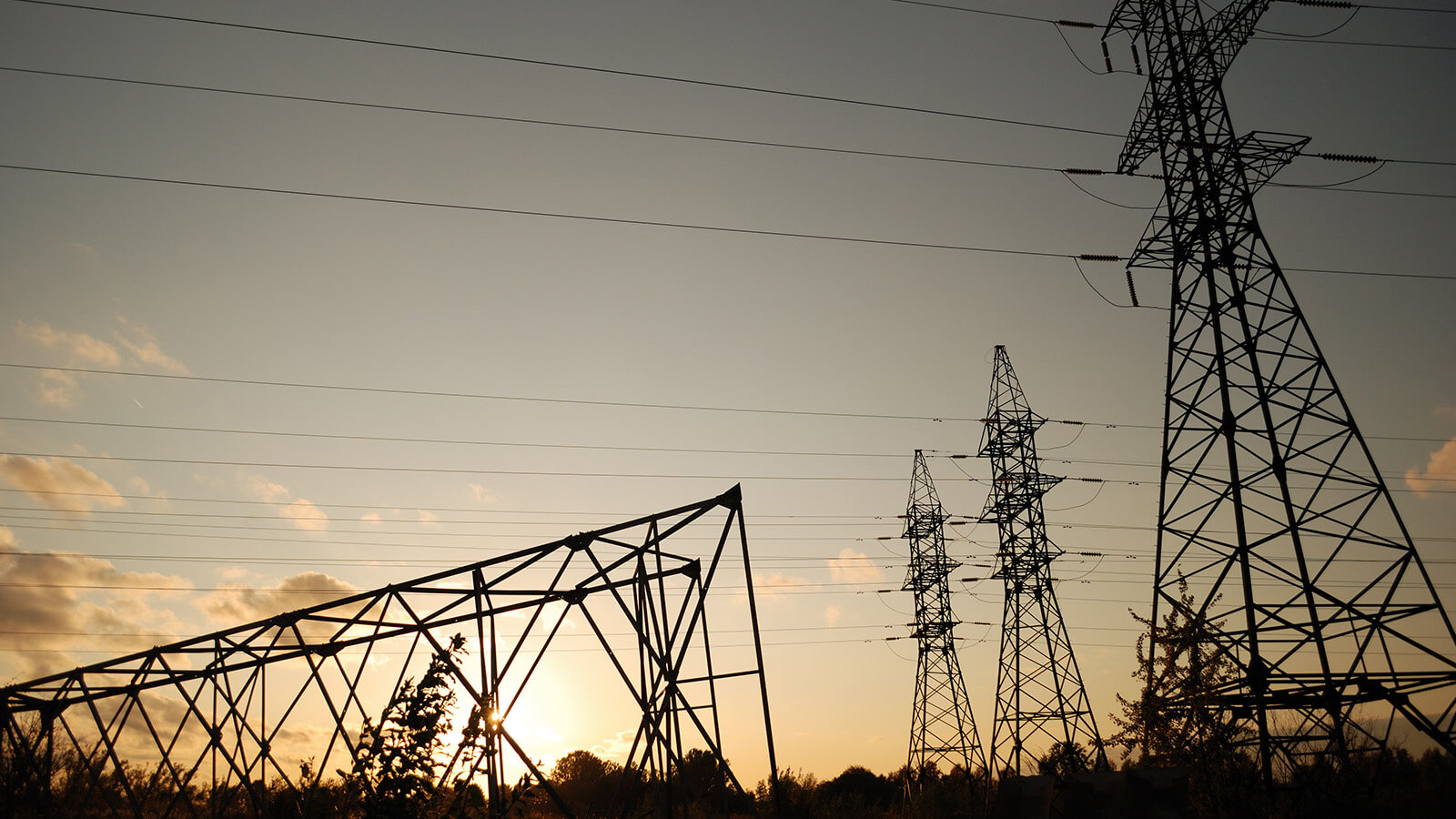

Asset health is a core part of resilience planning in every service territory. As utilities expand the grid to meet growing demand, they must also manage transmission infrastructure that may have been in service for decades. A strong asset health program gives teams a current view of each structure so they can determine where action is needed and which work should move first.
Determining which towers need inspection, repair, or replacement first helps utilities mitigate a range of operational and community impacts. When a tower failure occurs, it disrupts medical care, local businesses, and essential services. By prioritizing the structures with the clearest need, utilities can protect reliability.
One Structure Can Affect an Entire Community
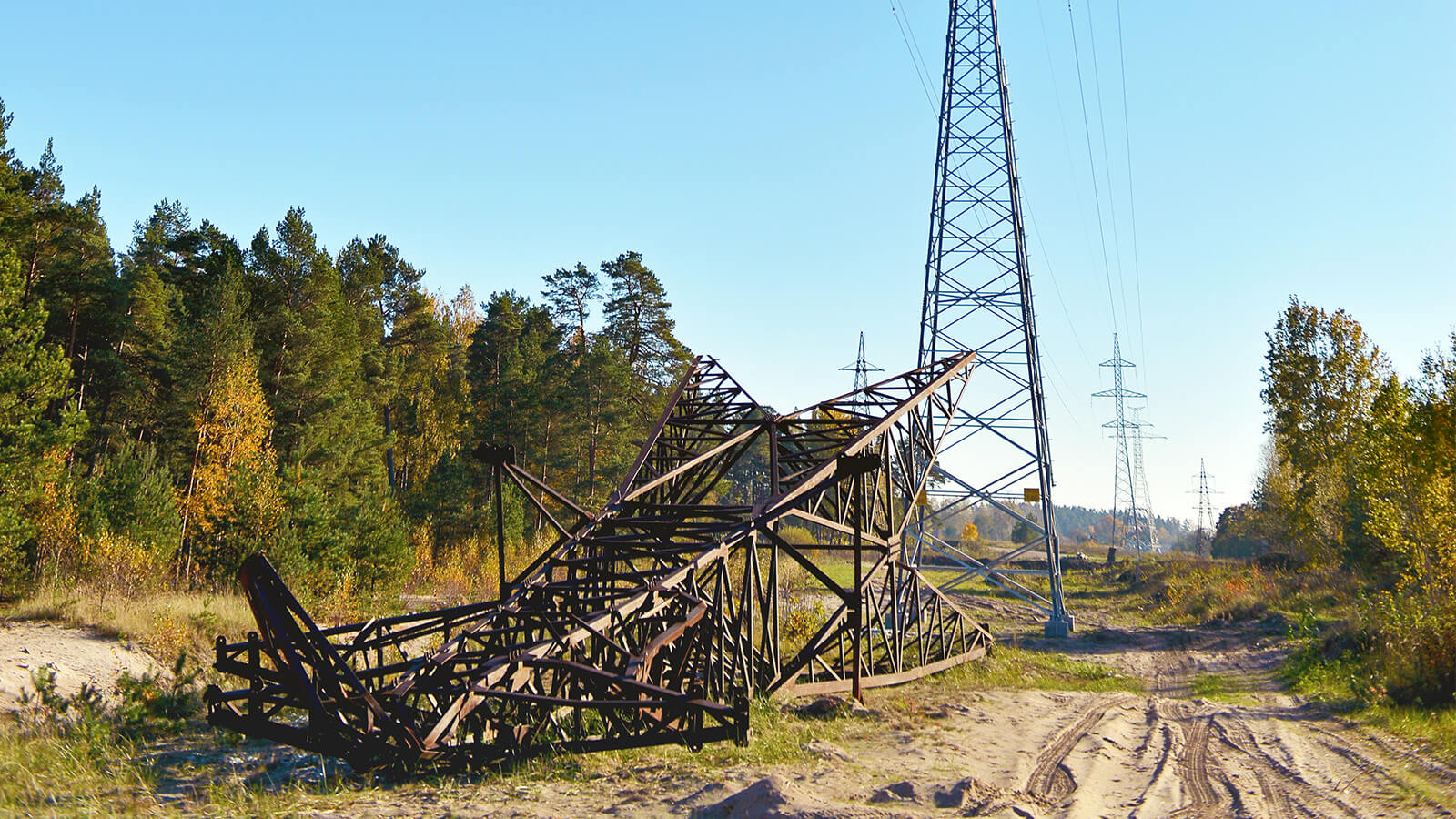
In May 2024, hurricane-force winds caused 17 legacy steel transmission towers in Houston, Texas, to fail, contributing to an outage that affected approximately 922,000 customers. In a later regulatory filing, CenterPoint reported that the original design criteria for the failed structures was unavailable (CenterPoint Energy Houston Electric Filing, 2025; Houston Faces Heat Risk as Thousands Remain Without Power After Deadly Storm, 2024).
Without original wind and load requirements, teams have less evidence for determining what the towers were built to withstand, how they might perform during hurricane-force winds, and which repairs are needed to meet the required standard. This limits a utility’s ability to develop maintenance priorities and plan corrective work.
Complete engineering records give utilities a stronger basis for due diligence, repair scoping, and field assessments. By connecting original design requirements with current asset conditions, teams can identify vulnerable structures and act before conditions require emergency restoration.
Another major outage followed a high-voltage tower failure in Nelson Mandela Bay, South Africa. The March 2026 collapse was the municipality’s seventh in less than two years and cut power to nearly half of Gqeberha (Seventh Pylon Collapse Sparks Blackout Across Nelson Mandela Bay, 2026). Concerns about the line’s condition had surfaced years earlier. Advanced corrosion was documented in 2016, and while some lattice towers were replaced, the broader refurbishment program remained incomplete.
After four towers fell in 2024, a full assessment identified extensive rust and structural weakness. By January 2026, officials knew that additional towers required attention, but work had not started before the March failure (Seventh Pylon Collapse Sparks Blackout Across Nelson Mandela Bay, 2026). Funding was cited as a reason the upgrades had not moved forward. Later that month, another tower collapse left parts of the area facing up to 21 days without power.
Even with limited budgets, utilities can prioritize the most urgent repairs and act before the cost and consequences of failure grow (Daily Maverick, 2026).

Together, the events reveal two asset health gaps. The issue in Texas illustrates how missing design criteria limits the full picture teams need to understand what towers were built to withstand and confirm repairs meet required standards. Tower collapse in South Africa shows how delayed maintenance leaves utilities managing emergency work. In both cases, reliable asset information and clear priorities help utilities direct resources toward urgent work before tower failure.
Engineering-Led Prioritization Based On Tower Risk
The two cases point to a common need for a clear path from asset evidence to action. This requires utilities to connect available asset records, environmental conditions, and field observations. Applying this level of review manually across thousands of towers can become slow and difficult to manage.
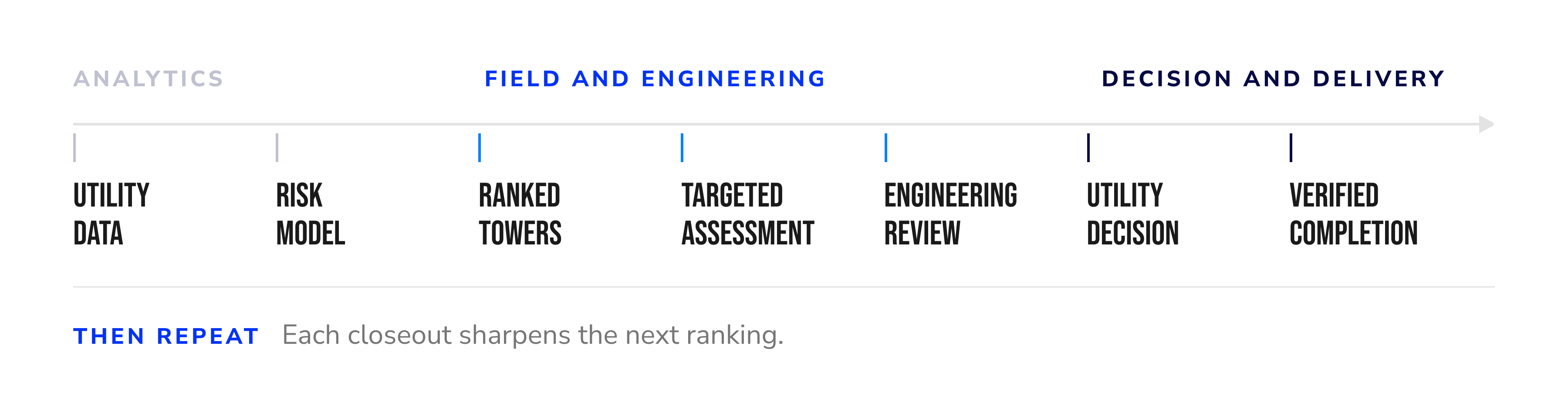
Predictive analytics helps utilities screen thousands of towers quickly and efficiently, creating a ranked starting point for targeted assessment. The ranking focuses engineering attention without replacing engineering judgment or utility authority.
The assessment creates value when its findings move beyond analysis and into a clear operating process:
What Assessing Thousands of Towers Revealed
The value of the engineering led process became clear for one major IOU. The utility’s existing age based assessment had flagged a large population of towers for replacement. EKN Engineering’s Tower Assessment Program brought asset evidence and engineering review together to confirm whether replacement was needed and identify the appropriate intervention for each structure.
The results challenged the original replacement list. EKN found that 87% of the original age based list did not require replacement. Instead, the evidence supported repair, maintenance, coating, monitoring, or deferral based on each structure’s condition. Only 13% were recommended for replacement.
EKN translated each finding into a priority rating and recommended action, helping leaders distinguish routine maintenance from repair, planned replacement, and immediate work. That distinction moved 1,937 towers off the replacement list, leaving 291 recommended for replacement. Compared with replacing all 2,228 towers, EKN’s Asset Health solution reduced costs by approximately $421 million*.
The assessment also exposed the utility’s existing selection process was not consistently identifying the towers in greatest need of attention. EKN developed a predictive analytics model to identify and rank structures more likely to require intervention. The model reduced pre-screening and risk-ranking time from approximately 3 hours to 10 minutes per structure. During the pilot, all 25 towers identified as high risk were confirmed to need repair.
Together, EKN’s Predictive Model and Asset Health solution help utilities find higher risk towers sooner, select the appropriate intervention, and direct resources where the evidence is strongest.
Turn Asset Evidence Into Action Before an Outage
The Houston and Nelson Mandela Bay outages show what is at stake, but they also point to a clear opportunity to act earlier. By connecting asset records, current conditions, risk priorities, and work status, utilities can identify which towers need attention before a failure forces emergency restoration.
A current, risk-ranked view helps utilities choose the right intervention and direct limited engineering, field, and capital resources toward the most important work. This allows utilities to move from responding to tower failures to reducing their likelihood, protecting reliability and the communities they serve.
Talk with EKN about ranking your transmission asset population for targeted assessment.
*Estimated savings assume $250,000 per structure replacement and $35,000 per targeted repair, based on utility cost guides and industry repair ranges. Actual costs vary by structure, location, and project requirements.