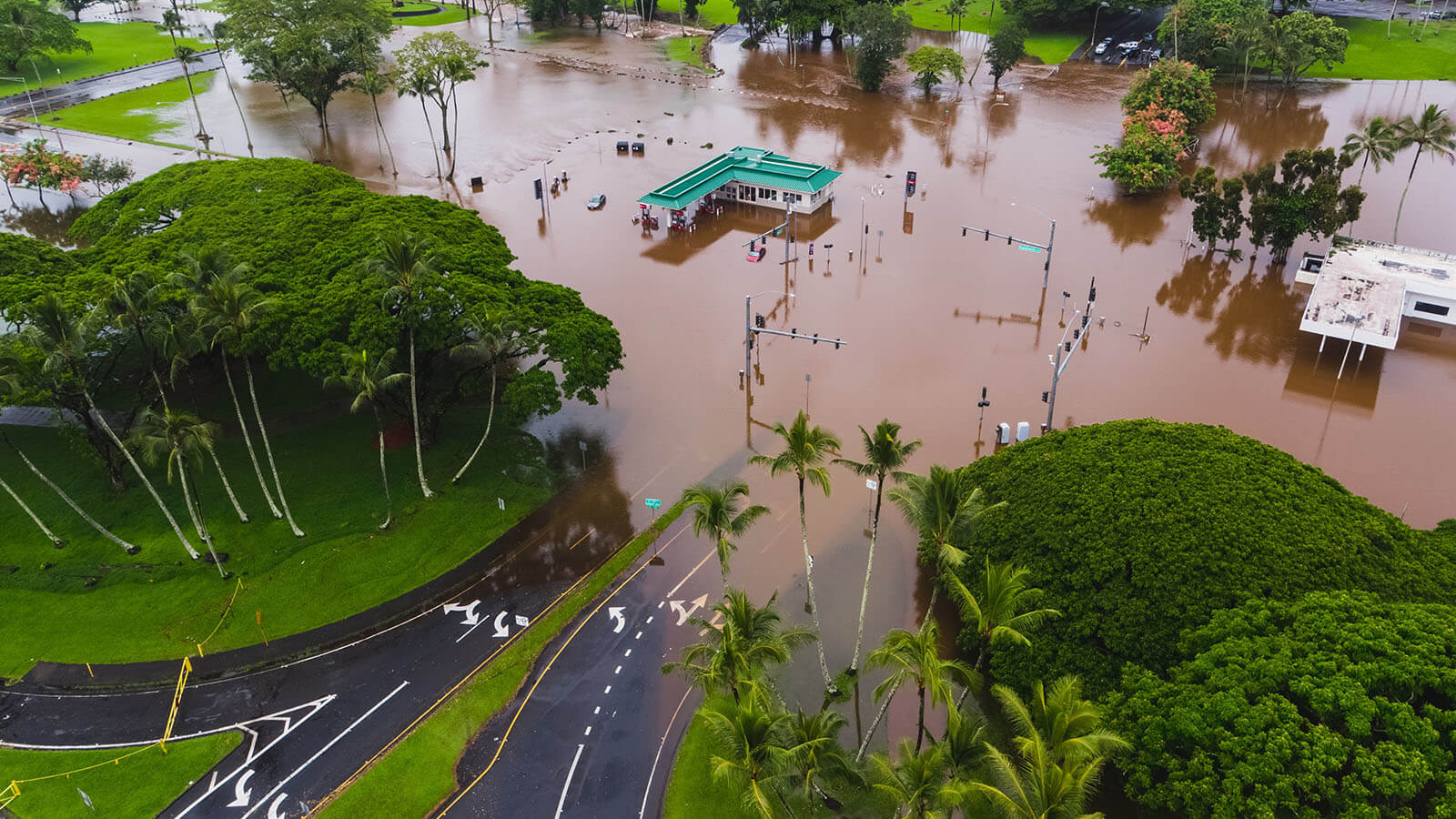

North Shore Flooding in Hawaii Disrupts Power and Response Efforts
Hawaii is dealing with its worst flooding in more than 20 years after a powerful kona low system brought heavy rain, strong winds, and major damage across Oahu’s North Shore (AP News, 2026). Prior storms saturated the ground, leaving little capacity for absorption and driving rapid runoff, flooding, and evacuations.
The storms also caused major outages, affecting more than 200,000 people. In some cases, utilities shut off power to prevent electrical hazards as floodwaters rose (MSN News, 2026). These conditions limit access and reduce visibility into field conditions, highlighting broader challenges utilities face during extreme weather.
Utilities follow a safety-first process when restoring power. Crews first make sure conditions are safe, then assess damage, prioritize critical services and large outages, and complete repairs before restoring power. During extreme weather events, utilities often lack the real-time field information needed to quickly identify damage locations and set priorities. These gaps can delay restoration, reduce efficiency, and increase operational risk during already complex conditions.
To close these gaps, utilities need an integrated operational view that unifies field, environmental, and asset data. By layering geospatial modeling, such as flood extents, asset locations, and environmental constraints, into a single view, teams can move from reactive coordination to proactive response and resilience. Field crews geotag and sync data to centralized systems, creating a real-time view of asset conditions and risk.
Additionally, predictive analytical models can estimate failure vulnerability and restoration complexity. By connecting environmental factors such as flood risk, soil conditions, and corrosion to specific assets, utilities have clearer visibility into field conditions and are able to plan more targeted repairs.
This is where EKN Engineering expertise comes in, helping utilities apply this data in real-world operations. EKN integrates multi-modal geospatial datasets into predictive analytical models, enabling utilities to turn data into actionable decisions. EKN used predictive modeling to reduce a months-long process to just hours, accelerating the identification of at-risk structures. Standardized data collection feeds field inputs into centralized systems, creating a real-time view of asset conditions and risk. This foundation supports EKN’s forward-looking analysis ahead of major weather events, such as atmospheric rivers, by identifying which assets face higher risk.
Events like the Hawaii flooding highlight the need for timely field intelligence. Utilities that translate field conditions into actionable insight can restore service faster, reduce risk, and improve resilience.
Get in touch to learn how EKN helps utilities improve emergency response and navigate complex weather challenges.